Filipino nurses in Germany: Triple Win, B2 and pay
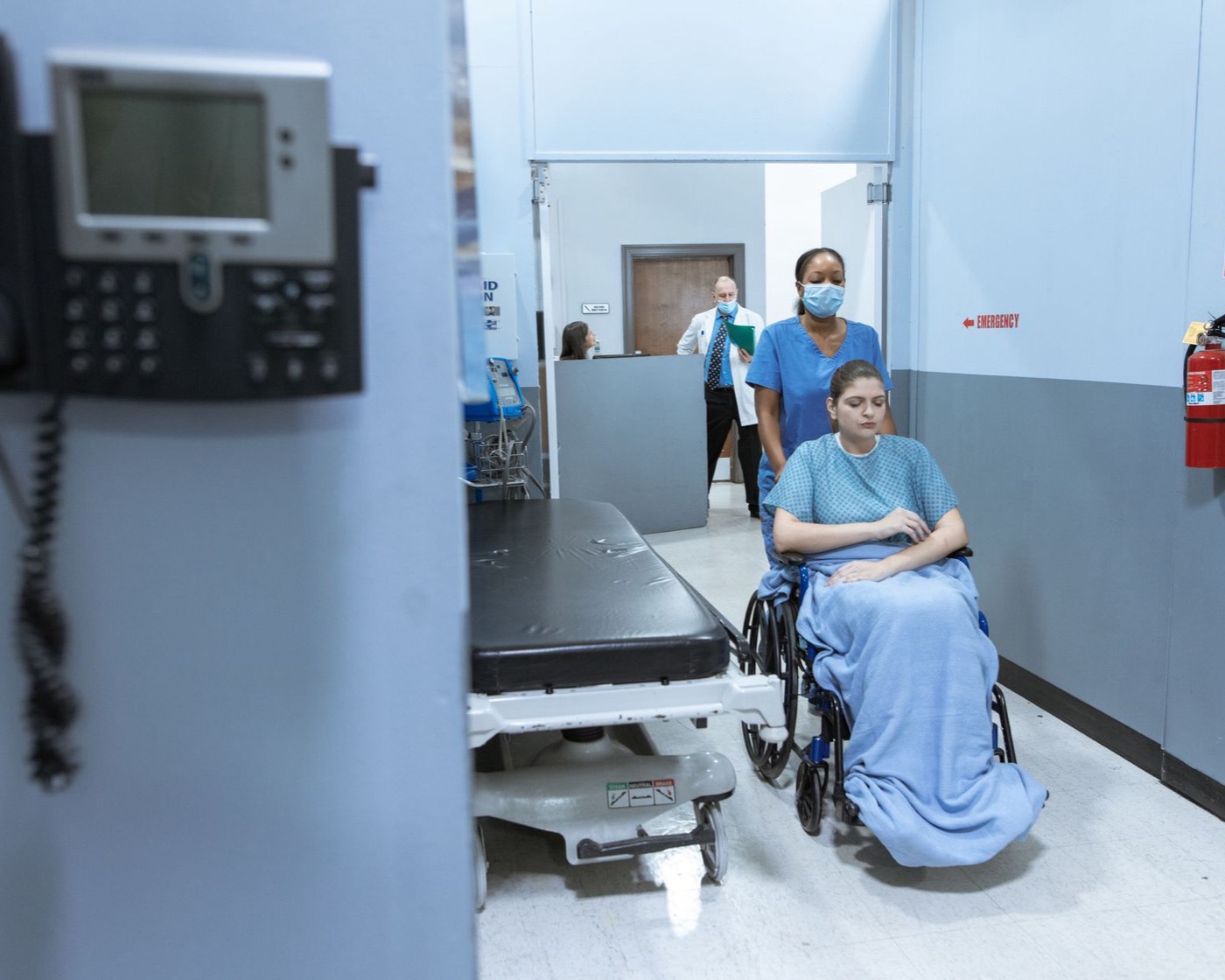
Germany recruits nurses from the Philippines through a government programme, pays a qualified nurse a median of €4,275 gross a month, and has three registered vacancies for qualified nurses for every unemployed one. Filipino nurses in Germany are no longer an experiment: 9,426 Philippine nationals worked in hospital nursing there in June 2023, and 3,600 qualifications from the Philippines were recognised in 2024 alone. The catch is the language, and it is a big one. This guide is the route in, step by step: Triple Win, the recognition procedure, the B2 test, the visa, and what the pay slip actually says.
Can a Filipino nurse work in Germany?
Yes, and the path is well worn. Nursing (Pflegefachfrau or Pflegefachmann) is a regulated profession in Germany, so you cannot work as a nurse until a state authority has recognised your Philippine degree and licence, and you cannot get that recognition without German at level B2. The whole route is built around those two facts. The numbers say it works: the IAB, the research institute of the Federal Employment Agency, counted 9,426 Philippine nationals in hospital nursing and 2,410 in elderly care in June 2023, which makes the Philippines the second-largest non-EU nationality on German hospital wards after Bosnia and Herzegovina. Destatis recorded 3,600 positive recognition decisions for qualifications from the Philippines in 2024. One honest number from our side: of the 11,754 German listings we track as of 17 September 2026, 430 are in healthcare, and only 2 of those have the ad written in English. The market is real. It is in German.
Triple Win: the official route
Triple Win is the programme run since 2013 by the Federal Employment Agency's international placement service (ZAV) together with GIZ, the German development agency. It recruits nurses from the Philippines, India (Kerala and Telangana), Indonesia and Tunisia. On the Philippine side the Department of Migrant Workers runs the recruitment, so there is no private agency in the chain. GIZ said in October 2025 that it had placed more than 8,000 nurses and trainees in around 400 German hospitals and care facilities since 2013, and that more than 6,000 had already arrived. The Federal Employment Agency's May 2026 nursing report counts 43,000 employed nurses from the four Triple Win countries in 2025, up from 2,000 in 2015, while noting that not all of them came through the programme. What you need, from the agency's Philippines page: a four-year BSN, an active PRC licence, at least six months of experience in a hospital, rehabilitation centre or care institution, and to be 40 or younger. German is not required at application. If you do not already hold a B1 or B2 certificate less than a year old, Triple Win pays for the course, A1 to B1, in Manila, Cebu or Baguio. From selection interview to departure takes around twelve to fourteen months. The costs you carry are the Philippine processing fees (DMW USD 100, OWWA USD 25, PhilHealth PHP 1,200, Pag-IBIG PHP 100) and your medical examination; placement, language training and integration support are free to the nurse. If a recruiter asks you for a placement fee to go to Germany, that is not Triple Win. Our guide for Indian applicants covers the same German market from the other big Triple Win country.
| Requirement | What the programme asks for |
|---|---|
| Degree | Bachelor of Science in Nursing, four years |
| Licence | Active Philippine nursing licence and PRC board certificate |
| Experience | At least six months in a hospital, rehabilitation centre or care institution |
| Age | 40 or under |
| German | B1 or B2 certificate less than a year old, or free A1 to B1 training in Manila, Cebu or Baguio |
| Your costs | DMW USD 100, OWWA USD 25, PhilHealth PHP 1,200, Pag-IBIG PHP 100, plus your medical |
| Time | Around 12 to 14 months from selection interview to departure |
| Who runs it | DMW in the Philippines; Federal Employment Agency (ZAV) and GIZ in Germany |
Recognition (Anerkennung): B2, four months and a test
Recognition is decided by the health authority of the federal state where you will work, and the federal portal Anerkennung in Deutschland sets out the rules. You can apply from the Philippines before you have a visa. You need German at B2 plus a specialist language exam for nursing; the fee is €170 to €845 depending on the state; and once your file is complete the authority must answer within four months. The answer takes one of two forms. Full equivalence, and you are licensed. Or 'substantial differences', and then you choose a compensatory measure: the Kenntnisprüfung, a knowledge test with oral and practical parts, or the Anpassungslehrgang, a supervised adaptation period on a ward that can by law run up to three years, with the length set by the gaps the authority found. Triple Win is built around this sequence: you arrive with B1, work on the ward under a recognition permit, and finish B2 and the compensatory measure in Germany. The IAB, citing a BIBB study, reports that where a compensatory measure was ordered, half of the procedures took up to 426 days between that decision and the final licence, and the other half took longer. Plan for a year in Germany at assistant pay before the full licence, and check the current fees and deadlines on the portal, because each state sets its own.
The visa: §16d, the recognition partnership and §18a
Three permits in the Residence Act (Aufenthaltsgesetz) matter. The recognition permit, §16d, is the one Triple Win nurses use: it lets you live in Germany while you complete the compensatory measure, is issued for up to 24 months and can be extended to a maximum of three years, and lets you work up to 20 hours a week in any job plus, with the employment agency's approval, unlimited hours in work related to your future profession. Since 1 March 2024, the second stage of the Skilled Immigration Act (Fachkräfteeinwanderungsgesetz) has added the recognition partnership under §16d(3): you and your employer commit in writing to complete recognition after you arrive, and you start work at once. The Anerkennung in Deutschland finder puts the language floor for that route at A2, the lowest of any nursing route; the permit is issued for one year and can be extended to three. Once the licence is in hand you switch to the ordinary skilled worker permit for people with vocational training, §18a, which is granted for any qualified employment. The embassy in Manila and the local foreigners' office apply these rules, so read the statute pages linked below rather than a recruiter's summary, and let the employer's HR carry the paperwork; for Triple Win employers it is routine. You do not need the Opportunity Card for this route; it is for people arriving without an employer.
What a nurse earns in Germany
The Federal Employment Agency publishes median gross monthly pay for full-time employees, and its May 2026 nursing report gives the 2024 figures. All nursing occupations together: €4,124, which is €253 more than in 2023, a rise of almost 7 %, and €110 above the median across every occupation in Germany. Qualified nurses (Fachkräfte): €4,275, and €4,409 in hospitals, the best-paid setting; care homes and home-care services pay less. Nursing assistants (Helfer): €3,215 overall, €3,528 in hospitals, €3,140 in care homes and €3,021 in home care. That assistant band is typically where you sit during recognition, so budget on roughly €3,000 to €3,500 gross in year one, then €4,275 and up once licensed. Gross is not net: income tax and social contributions take a large slice, and the agency's Entgeltatlas lets you check any occupation by region. Two more facts from the same report. Nursing pay has risen faster than the average across all occupations since 2019, helped by a 2022 law that lets care providers bill the care insurers only if they pay collective-agreement rates. And the unemployment rate among qualified nurses in 2025 was 1.1 %.
| Group | Median gross pay, € per month |
|---|---|
| Qualified nurse, hospital | 4,409 |
| Qualified nurse, all settings | 4,275 |
| All nursing occupations | 4,124 |
| Nursing assistant, hospital | 3,528 |
| Nursing assistant, all settings | 3,215 |
| Nursing assistant, care home | 3,140 |
| Nursing assistant, home care | 3,021 |
How big the shortage is
The Federal Employment Agency's 2025 shortage analysis lists 157 occupations with a skills shortage and names nursing first among the fields affected. Its May 2026 nursing report gives the mechanics. About 1.8 million people worked in nursing occupations in 2025, up 2 % in a year while total employment in Germany stagnated. 20 % of them are foreign nationals, up from 7 % in 2015, and since 2022 the entire growth in nursing employment has come from foreign staff while the number of German nurses falls. An average of 31,000 nursing vacancies were registered with the agency in 2025, 20,000 of them for qualified nurses, against 7,000 unemployed qualified nurses: 57 job seekers per 100 openings, and the agency notes that only about half of all vacancies are ever registered with it. The demand side is demographic. Destatis counted just under 5.7 million people in need of care in December 2023, up 730,000 or 15 % in two years, and its projection reaches 6.8 million by 2055. The agency's own verdict is that no easing is in sight in the short or medium term. Browse the German healthcare listings to see where the demand sits.
What nobody mentions
First, the ads. Of the 430 healthcare listings we track in Germany, 2 are written in English; across all 11,754 German listings, 907 are in English, and 905 of those are outside healthcare. A nurse's job search in Germany happens in German from the first ad, which is one more reason B2 is not optional. Second, agencies. Triple Win charges the nurse nothing beyond the Philippine government fees; if a recruiter wants thousands of dollars to arrange the same thing, the DMW is not in the loop, and you should ask why. Third, the wait. Twelve to fourteen months before you fly, up to four months for the recognition decision once your file is complete, then a compensatory measure that in half of cases has taken up to 426 days to close. Two to three years from first interview to full licence is normal, and most of the second half is spent on assistant pay. Fourth, the setting. Hospitals pay the most, and the agency counts 734,000 nursing staff there against 537,000 in care homes and 306,000 in home care; a care-home contract is a fine way in, but read the pay band and the shift pattern before you sign. Fifth, Sweden. It is the other large healthcare market we cover, with 732 healthcare listings as of 17 September 2026, every one of them in Swedish, so the Swedish healthcare page is worth a look only if you are choosing which language to learn. German opens the larger door.
Workcamino is not where you find Triple Win; the DMW is. What we do is show the German healthcare market as it is: the 430 listings, read out of every ad and checked daily, so you can see the cities, the settings and the German they expect before you spend two years learning it. Buen camino.
Frequently asked questions
How much does a nurse earn in Germany?
The Federal Employment Agency's median for full-time qualified nurses was €4,275 gross a month in 2024, and €4,409 in hospitals. Nursing assistants, which is what you are until your licence is recognised, had a median of €3,215, or €3,528 in hospitals. All figures are gross, before tax and social contributions.
What German level do Filipino nurses need for Germany?
B2 plus a specialist nursing language exam for the licence. Triple Win takes you from A1 to B1 in the Philippines at no cost before you fly, and you finish B2 in Germany. The recognition partnership route has a legal floor of A2 at entry. Nobody gets a licence below B2.
How do I apply for Triple Win from the Philippines?
Through the Department of Migrant Workers, not a private agency. You need a four-year BSN, an active PRC licence, at least six months of hospital or care experience and to be 40 or under. Selection to departure takes around twelve to fourteen months. You pay the Philippine government fees and your medical; placement and training are free.
How long does nurse recognition take in Germany?
The state authority must decide within four months of receiving a complete file. If it orders a compensatory measure, which is normal for a Philippine BSN, the IAB found half of those cases took up to 426 days more to reach the final licence. Plan for a year in Germany as an assistant before you are fully licensed.
How many Filipino nurses are there in Germany?
The IAB counted 9,426 Philippine nationals in hospital nursing and 2,410 in elderly care in June 2023, the second-largest non-EU group on hospital wards. Destatis recorded 3,600 positive recognition decisions for qualifications from the Philippines in 2024. GIZ says Triple Win has placed more than 8,000 nurses from all partner countries since 2013.
Are there nursing jobs in Germany advertised in English?
Almost none. Of the 430 healthcare listings we track in Germany as of 17 September 2026, 2 have the ad written in English. Across all 11,754 German listings, 907 are in English, nearly all outside healthcare. A nursing job search in Germany is done in German from the first ad.